Best Locations in Berlin for Documentary Interviews and B-Roll
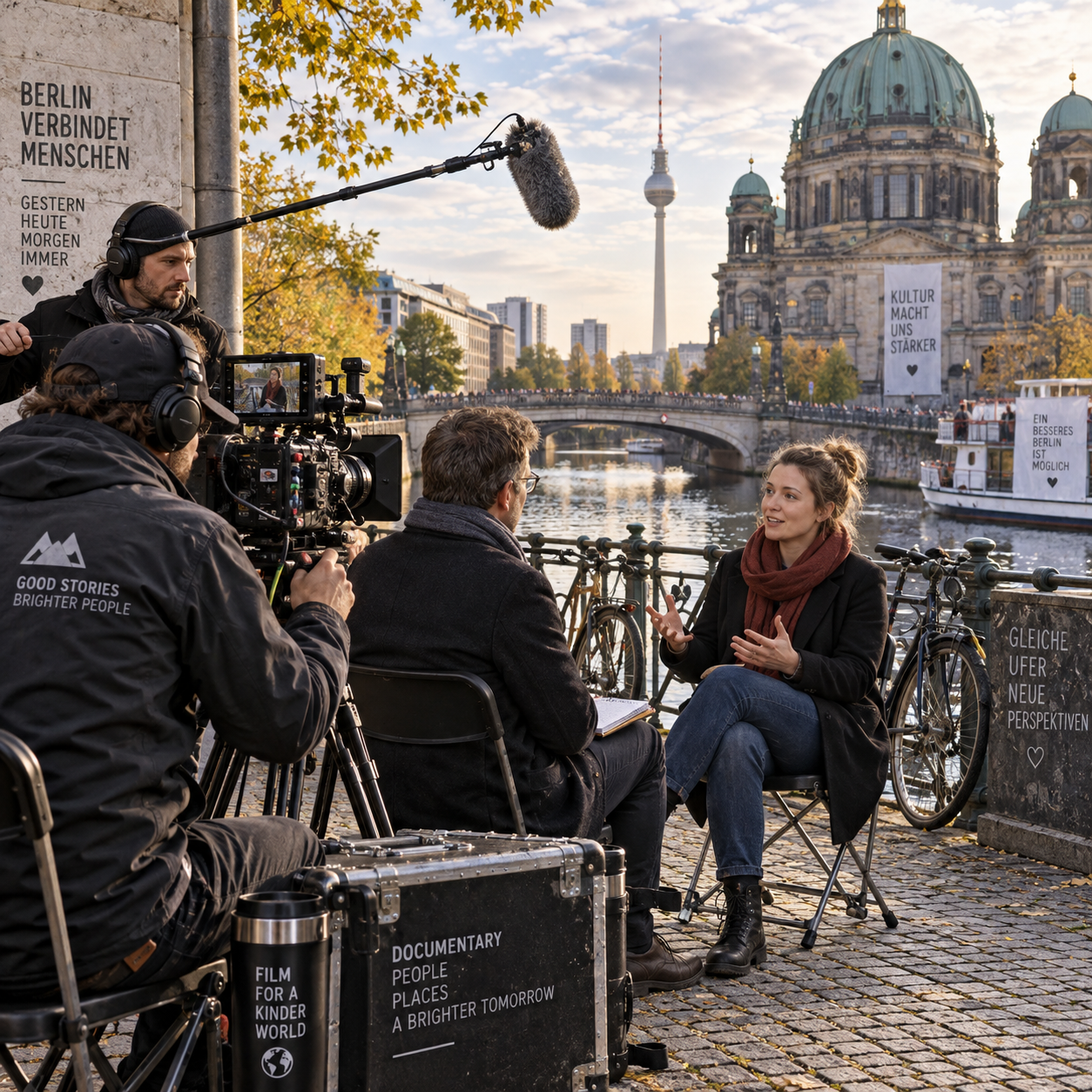
Berlin gives documentary filmmakers an unusually broad visual palette: historic sites, residential neighborhoods, public spaces, waterways, industrial architecture, and intimate interiors can all exist within a short journey. The strongest location, however, is rarely the most famous one. It is the place that helps the audience understand the subject while giving the crew workable sound, light, access, and background activity.
How to Choose a Berlin Location for Documentary Filming
Choose a Berlin filming location by matching the subject, visual tone, interview conditions, and practical constraints. A location should explain something about the participant or story, not simply decorate the frame.
Begin with the narrative question. A community story may need a market, courtyard, or local café; a film about memory may benefit from a historic street or former industrial area; a technology documentary might feel more credible in a workshop, studio, or modern public space. This connection gives the location narrative relevance.
Then assess the location through five filters:
- Sound: listen for traffic, trams, construction, aircraft, music, ventilation systems, and voices. Record at least 60 seconds of ambient sound during the planned shooting time.
- Light: check the direction and intensity of natural light, especially near reflective water, glass buildings, or tree cover. A visually attractive spot may become unusable when direct sunlight creates changing exposure.
- Comfort: interview subjects need a stable seat, manageable temperature, privacy, and a natural eyeline. A nervous participant rarely improves because the background looks impressive.
- Access: consider stairs, lifts, parking, public transport, toilets, equipment movement, and whether a small crew can work without obstructing people.
- Visual variety: identify wide establishing shots, medium activity, close details, movement, and cutaways within walking distance.
A useful scouting rule is story first, frame second, logistics third. If a location passes only the visual test, use it for B-roll rather than the main documentary interview.
Historic Berlin Locations for Context-Rich Interviews and B-Roll
Historic Berlin locations add political, cultural, and architectural context, but they work best when the history supports the interview rather than overpowering it. Use them for carefully composed B-roll, transitional images, and interviews connected directly to memory, identity, conflict, or urban change.
Areas around the Berlin Wall sites, including sections of the East Side Gallery and the Berlin Wall Memorial at Bernauer Strasse, can provide visual evidence of division, reunification, and public memory. The remaining wall, watchtower references, traces in the pavement, and surrounding apartment blocks create layered images. These places are usually stronger for contextual sequences than for a long sit-down interview because visitor movement and ambient sound can be unpredictable.
Former industrial areas such as Tempelhof, parts of Kreuzberg, and repurposed railway or factory sites offer a different historical texture. Exposed brick, concrete, steel, rail infrastructure, and traces of previous use can support stories about migration, labor, music, housing, or redevelopment. Scout carefully: some sites are public, some are privately managed, and filming conditions can differ considerably.
Historic courtyards and streets around Mitte may provide quieter interview backgrounds than major memorials. Frame architectural details, doorways, tram lines, and changing shadows instead of placing a participant directly in front of a landmark. Check the site’s current rules before bringing a tripod, lighting kit, or larger crew; the official Berlin.de portal is a useful starting point for municipal information.
One common mistake is treating a memorial as a neutral backdrop. Its meaning can dominate the edit and create an unintended tone. Ask whether the participant has a genuine relationship to the site. If not, capture the location as contextual B-roll and conduct the interview somewhere quieter nearby.
Neighborhoods That Capture Everyday Berlin
Berlin neighborhoods provide the most authentic everyday B-roll when filmmakers observe ordinary routines rather than stage a postcard version of the city. Residential streets, markets, cafés, courtyards, and local gathering spaces reveal how people live, work, travel, and meet.
Kreuzberg can support stories about migration, food, activism, music, and changing housing patterns. Neukölln offers busy commercial streets, neighborhood cafés, small businesses, and varied residential architecture. Prenzlauer Berg can suit family, housing, and urban change stories, while Wedding often provides a visually varied mix of workshops, streets, courtyards, and community activity. These are not fixed identities; each district contains many different experiences, so let the participant’s connection guide the choice.
Markets are productive B-roll environments because they supply hands, exchanges, textures, movement, and natural ambient sound. Ask vendors and recognizable contributors before filming close-ups. A wider observational shot may be possible in a public space, but privacy still matters when individuals become identifiable or the footage concerns a sensitive subject.
Cafés and courtyards can be better interview locations than streets. They offer a social connection and visual depth, yet music, refrigeration, espresso machines, and customer conversations can ruin dialogue. Request a quiet corner, visit during an off-peak period, and record a clean minute of room tone. A courtyard may look silent while transmitting footsteps, deliveries, or voices from surrounding buildings.
For neighborhood documentaries, plan a compact route: interview setting, participant’s workplace, nearby street, local shop, and a practical transition point such as a tram stop. This reduces equipment moves and gives the edit a coherent geographic rhythm.
Parks, Canals, and Waterfronts for Natural-Looking Interviews
Berlin’s parks, canals, and waterfronts provide natural light, depth, reflections, greenery, and moving backgrounds for relaxed interviews and flexible B-roll. They are especially useful for environmental, personal, lifestyle, and community stories, provided the crew controls wind and sound.
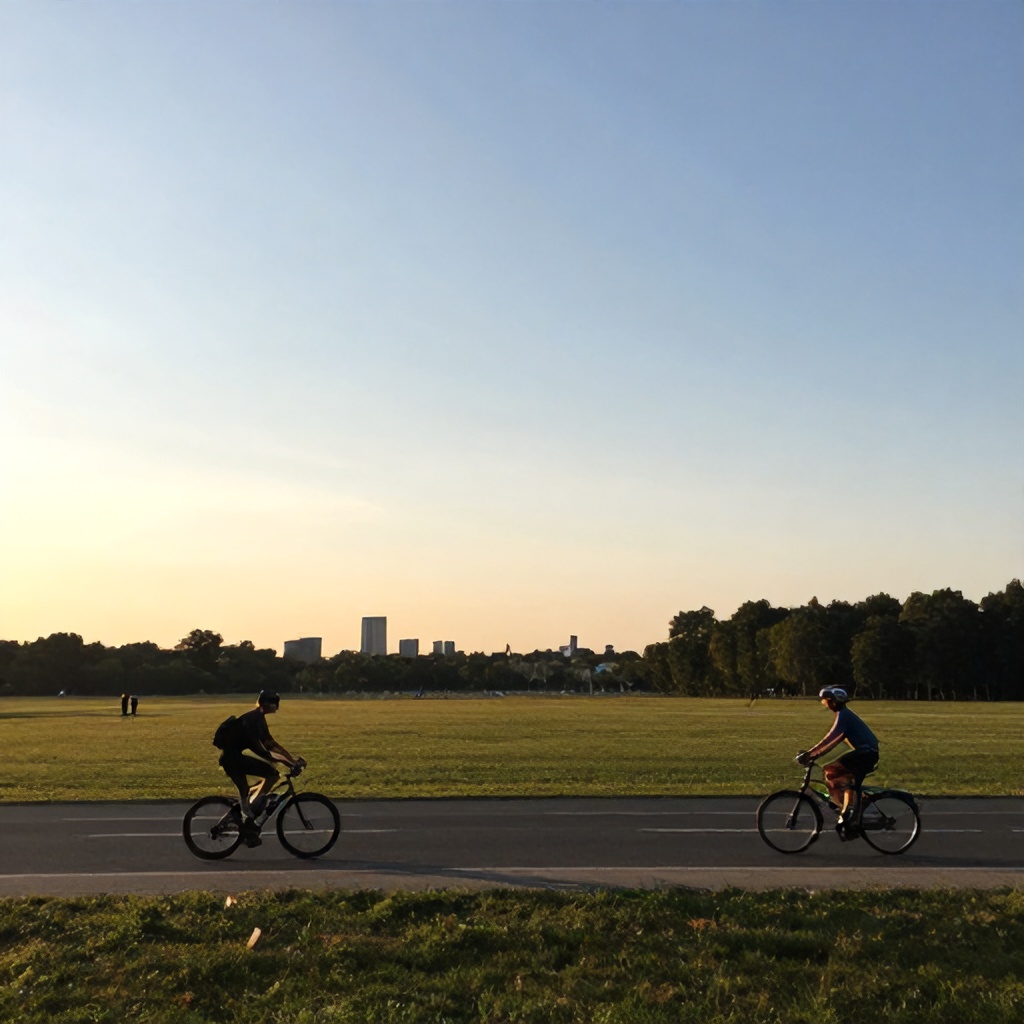
Tiergarten offers wooded paths and open clearings, while Tempelhofer Feld creates broad skies, long sightlines, cyclists, and strong urban scale. The Landwehrkanal, Maybachufer, and parts of the Spree can provide reflections, bridges, boats, and layered movement. Smaller green spaces may be better for intimate interviews because they reduce the visual and acoustic pressure of a large landmark.
Outdoor filming changes quickly. Wind affects lavalier microphones, leaves create shifting exposure, and bright water can bounce hard light onto a face. Use a windscreen, monitor headphones continuously, and position the subject with open shade when possible. A reflector can help, but a large setup may attract attention or become difficult to manage in crowded public spaces.
Choose the background according to the interview’s emotional register. Calm water and slow foot traffic can support reflection; cyclists, boats, and busy paths add energy but may create distracting movement. Keep the subject’s eyeline away from the busiest route, and leave enough separation between the participant and background so people do not repeatedly cross the frame.
Always identify an indoor or sheltered backup nearby. Weather can change within a shooting day, and a beautiful waterfront becomes a poor interview site when rain, gusts, or loud public events arrive.
Creative and Industrial Spaces for Contemporary Documentaries
Creative and industrial spaces give contemporary documentaries texture, controlled composition, and a direct connection to making, performance, design, technology, or social change. Use studios, converted warehouses, cultural venues, railway areas, and modern architecture when the setting reflects the participant’s work or ideas.
A working studio can reveal tools, unfinished materials, gestures, and routine. A rehearsal room or music venue supplies useful B-roll through cables, instruments, sound checks, stage preparation, and empty-seat details. Converted warehouses and former railway spaces can suggest experimentation and redevelopment, while modern buildings around Potsdamer Platz or Hauptbahnhof may suit stories about infrastructure, business, mobility, or Berlin’s changing skyline.
These locations often make stronger interviews than exposed public landmarks because the crew can control the background and place the participant within a meaningful environment. The trade-off is permission. A private venue may require a written agreement, restrictions on filming artwork or other people, and limits on lighting, crew size, or operating hours.
Ask the location manager three practical questions before confirming the shoot:
- Can the crew record clean dialogue without music, machinery, or public programming?
- Can equipment be loaded in, secured, and removed without disrupting the venue?
- What areas, logos, artworks, staff, or visitors require consent or exclusion?
Modern architecture can create clean lines and scale, but glass, polished stone, and open atriums often produce reverberant audio. Treat visually impressive interiors as B-roll options unless you can test the acoustics and control the space.
Practical Filming Considerations in Berlin
Successful Berlin documentary filming depends on permissions, privacy, sound control, transport, weather planning, and efficient location scouting. Confirm the legal and operational conditions before the shoot rather than solving them when the camera is ready.
Filming in public does not automatically remove privacy concerns or guarantee unrestricted commercial access. Rules may vary by site, borough, venue, and production scale. Contact the relevant property manager or authority when using a tripod, recording a structured interview, controlling public space, filming recognizable people as subjects, or operating with a larger crew. The Berlin film information pages can help identify appropriate contacts, while the German image-rights framework provides useful legal context. For legal advice, consult a qualified professional.
Sound deserves priority. Berlin’s traffic, trams, aircraft, construction, nightlife, and public announcements can change between a scout and the shoot. Use headphones, a directional microphone where appropriate, a properly protected lavalier, and room tone or outdoor ambience recorded at every location. Do not rely on noise reduction to rescue dialogue recorded beside a busy road.
Build a practical radius around each interview. Ideally, your establishing shot, participant activity, detail shots, and backup interior should be within 10 to 20 minutes of one another. This protects the schedule and preserves continuity in weather and light.
Common mistakes include choosing a location at the wrong time of day, underestimating public noise, and ignoring participant accessibility. Visit once during the proposed shooting window, note sun direction and crowd patterns, and ask the subject what environment feels natural. An authentic setting that makes the participant comfortable will usually produce better testimony than a spectacular but stressful backdrop.
Building a Location Plan for a Cohesive Documentary Sequence
Build each Berlin location around a complete visual sequence: establishing shot, interview, activity, details, transitions, and cutaways. This approach creates usable editorial coverage instead of a collection of unrelated city images.
Start with the interview location as the anchor. Write down what the participant says the place means, then identify images that prove or deepen that meaning. For a community organizer in Neukölln, the sequence might include the exterior street, the participant unlocking a meeting space, hands arranging chairs, a conversation detail, neighborhood movement, and a quiet closing shot of the empty room.
Use a simple four-part planning model:
- Context: capture the wider urban landscape, architecture, street, canal, park, or industrial setting.
- Character: film the participant’s relationship to the place through movement, work, routine, or interaction.
- Texture: collect close details such as signage, surfaces, tools, food, transport, reflections, and hands.
- Transition: record connecting images that help the edit move through time or space, including walking, trains, bridges, doors, and changing light.
Keep a continuity log with location, time, weather, camera direction, ambient sound, and permission status. Shoot several durations: five-second details, 10-second action clips, and longer observational takes. Vary focal length and camera height, but avoid movement that the story does not justify.
The final test is simple: if the location disappeared from the film, would the audience lose context, emotion, or understanding? If the answer is no, it may be attractive B-roll, but it is not yet the right documentary location.
Frequently Asked Questions
What makes a Berlin location suitable for a documentary interview?
A suitable location connects to the participant’s story, offers clean enough sound, provides stable and flattering light, and allows the subject to feel comfortable. Background movement should add context without competing with the testimony.
Where can filmmakers capture authentic Berlin B-roll?
Residential streets, markets, cafés, courtyards, canals, parks, workshops, cultural venues, and former industrial areas can all provide authentic Berlin B-roll. Choose places connected to the documentary subject rather than filming generic landmarks.
How can filmmakers reduce noise during outdoor interviews?
Scout at the exact shooting time, move away from traffic and hard reflective surfaces, use wind protection, place microphones close to the subject, monitor with headphones, and record a clean backup take when the sound environment briefly improves.
Do documentary filmmakers need permission to film in Berlin?
Permission requirements depend on the site, crew size, equipment, purpose, and whether recognizable people or private property are involved. Contact the relevant authority or property manager before filming, especially for controlled public spaces and commercial productions.
What are good indoor alternatives when outdoor conditions are poor?
Quiet cafés, libraries with approval, studios, workshops, community centers, cultural venues, offices, and the participant’s home or workplace can work well. Test reverberation, heating or ventilation noise, window light, and privacy before committing.