The Impact of German Film Subsidies on Documentary Production
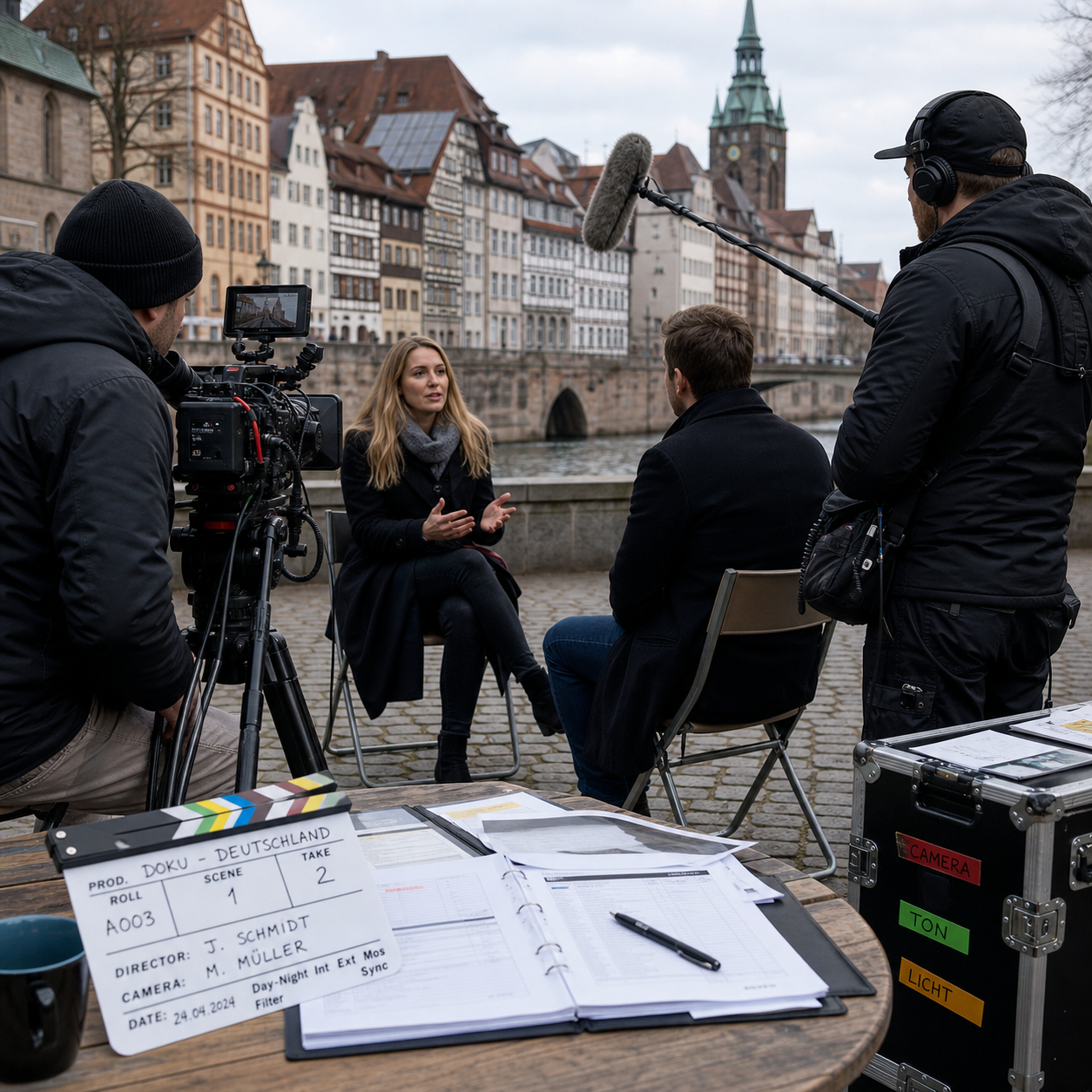
German film subsidies have a major influence on which documentaries get made, how they are produced, and who can reach an audience. Public support can turn a promising investigation into a viable production, especially when commercial investors consider a subject too specialized, politically sensitive, or unlikely to generate immediate box-office revenue.
Germany’s system combines federal and regional film funds with broadcaster participation, European finance, private investment, and international co-production. The result is a valuable but competitive financing environment. Subsidies reduce risk, yet they also bring eligibility rules, application deadlines, regional obligations, reporting requirements, and expectations about cultural or economic impact.
How Germany’s Film Subsidy System Works
Germany’s film subsidy system is a layered public-finance structure in which federal agencies, regional funds, and broadcasters support different parts of a film project. Documentary producers usually assemble a financing plan from several sources rather than relying on one grant.
At federal level, the Filmförderungsanstalt (FFA) supports German cinema through measures connected to production, distribution, exhibition, and audience development. The German Federal Film Fund (DFFF), administered through the German Federal Film Board, is primarily designed as an incentive for eligible production spending in Germany. Its relevance to documentaries depends on the project, expenditure profile, programme rules, and current funding framework.
Regional film funds operate through institutions such as Medienboard Berlin-Brandenburg, Film- und Medienstiftung NRW, FFF Bayern, MOIN Filmförderung Hamburg Schleswig-Holstein, and other state-level agencies. They may support development, production, post-production, distribution, or regional training. In return, a project commonly needs a connection to the territory through a local production company, crew, facilities, spending, subject matter, or distribution activity.
Broadcasters and public-service media are another important part of the ecosystem. A broadcaster’s commissioning or licence-fee contribution can provide both finance and a route to viewers, although it may involve editorial discussions, delivery specifications, scheduling considerations, and rights negotiations. European funds, foundations, sales advances, crowdfunding, and private partners can complete the budget.
For current rules and official programme information, producers should consult the FFA and each regional fund directly. Requirements change, and a rule that applies to one programme may not apply to another.
Why Subsidies Matter for Documentary Filmmakers
Subsidies matter because they make culturally important and financially uncertain documentaries more feasible. Public funding can protect projects whose value lies in investigation, social impact, artistic experimentation, or long-term access rather than predictable commercial returns.
Documentary production carries unusual uncertainty. Access may collapse, a legal issue may delay filming, a subject may change their mind, or a story may develop in a direction that the original treatment could not predict. Development funding gives producers time to research, build relationships, test access, and refine the central question before committing to a full shoot.
Production funding can then reduce dependence on personal finance or premature commercial commitments. That matters for films involving remote locations, archival research, multilingual crews, legal review, specialist cinematography, or extended observation. A stronger budget may allow the director to return to a location, record better sound, license essential material, and protect editorial independence.
Subsidies also provide professional validation. Selection by a respected fund can reassure broadcasters, co-producers, distributors, and private investors that the project has passed a formal editorial and financial assessment. This does not guarantee completion or success, but it can improve a producer’s negotiating position.
The benefit has a clear trade-off: public support is selective. Projects with strong access but inexperienced teams may struggle to demonstrate delivery capacity, while formally polished applications can sometimes appear safer than genuinely risky ideas. Producers must explain both the film’s public value and the practical route to completion.
Funding Across the Documentary Production Lifecycle
Documentary funding can follow four main stages: development, production, post-production, and distribution. Treating these as separate financing problems helps producers ask for the right support at the right time.
Development funding
Development support may cover research, producer and director fees, travel, preliminary filming, access negotiations, legal consultation, archival investigation, and the creation of a teaser or proof of concept. The objective is to turn an idea into a credible project with a defined subject, narrative approach, access strategy, audience, budget range, and financing route.
Production funding
Production support generally addresses principal photography and related costs. These can include crew, equipment, travel, accommodation, insurance, production management, location expenses, translation, permissions, and contingency. A fund may assess whether the budget is proportionate to the creative ambition and whether the producer can manage the project responsibly.
Post-production and distribution
Post-production finance can support editing, sound design, music, colour grading, subtitles, accessibility versions, archival licensing, legal review, and mastering. For documentaries, these costs can rise late in the process when an unexpected archive discovery or rights problem changes the edit.
Distribution support may assist with festival strategy, publicity, subtitling, promotional materials, educational outreach, and theatrical or community screenings. This stage is essential because a completed film can still disappear without a realistic audience plan.

Eligibility, Applications, and Selection Criteria
Eligibility depends on the specific fund, but applications usually require a convincing project, qualified creative team, realistic budget, financing plan, and distribution strategy. Producers should treat each programme’s guidelines as a separate set of conditions rather than assuming one successful application can be reused unchanged.
A typical documentary application may include:
- A synopsis, treatment, director’s statement, and explanation of the documentary’s access and methodology.
- A production plan showing research, filming phases, locations, schedule, staffing, and risk management.
- A detailed budget that separates development, production, post-production, overheads, rights, contingency, and eligible regional expenditure.
- Producer, director, cinematographer, editor, and other key team biographies, supported by relevant credits.
- A financing plan identifying confirmed, pending, and prospective contributions from broadcasters, co-producers, investors, sales agents, or other funds.
- An audience and distribution strategy covering festivals, cinemas, television, streaming, educational use, or community screenings.
Selection panels may consider artistic quality, cultural relevance, feasibility, originality, audience potential, economic effect, regional spending, and the applicant’s delivery record. A compelling subject cannot compensate for unclear access or an unrealistic budget. Conversely, a modestly funded film may compete successfully when its method, voice, and production plan are precise.
Common mistakes include applying before access is sufficiently developed, disguising a speculative budget as a confirmed one, and treating regional spending as an afterthought. Each error weakens confidence in the project and can create problems if funding is awarded.
The Benefits and Constraints of Public Funding
Public funding offers financial stability, development time, and industry credibility, but it also imposes conditions that affect timing, administration, rights, and sometimes creative decisions. Producers should evaluate a subsidy by its total value, including both cash support and obligations.
- Financial leverage: A grant or incentive can unlock other finance and reduce the amount of personal or private capital at risk.
- Better production quality: Adequate resources can improve research, sound recording, translation, archival access, and post-production.
- Longer creative timelines: Development support can prevent a rushed shoot and allow trust with contributors to grow.
- Market access: A broadcaster, fund, or co-production partner may create routes to festivals and audiences.
The constraints are equally practical. Applications take time, decisions may not align with production needs, and approved budgets can restrict spending to eligible categories or territories. Producers may need formal procurement records, interim reports, audit documentation, credit obligations, and proof that cultural or regional conditions were met.
Funding can also influence rights. A broadcaster may seek specific transmission windows, while a co-producer may require territory-based exploitation rights. These arrangements can expand reach but reduce flexibility for later sales. The sound approach is to model cash flow, rights, and reporting obligations before accepting an award.
Effects on Documentary Content and Industry Practice
German subsidies expand documentary production while also shaping subjects, formats, locations, teams, and routes to audiences. Their influence is visible in both what gets made and how producers organize the work.
Public support makes room for documentaries about social inequality, migration, environmental change, history, labour, politics, science, and cultural memory. It can support films that need patient observation rather than a fast television turnaround. Emerging directors may gain a first significant credit, while established producers can take on formally ambitious projects.
Regional funds encourage production activity beyond the largest commercial centres. A project may hire local crew, use regional post-production facilities, or build a partnership with a company in the fund’s territory. This strengthens professional networks, although it can also encourage artificial spending choices when the regional connection is weak.
Co-production creates another structural effect. German producers may partner with companies in France, Austria, Switzerland, or other countries to share access, expertise, finance, and distribution. International collaboration can broaden a film’s perspective and audience. It can also produce more complex rights structures and editorial negotiations.
There is a subtle content risk. Producers may adapt a project’s structure, length, language, or tone to fit a broadcaster slot or programme category. Those changes are sometimes useful, but they can narrow an investigative film’s possibilities. A strong application therefore describes a clear editorial core while showing where collaboration can improve the work.
Practical Strategies for Documentary Producers
To pursue German documentary subsidies effectively, map the project’s needs first, match each need to a suitable fund, and build a financing plan that remains workable if one application fails. The following sequence reduces wasted effort.
- Define the project’s financing stage. Decide whether you need research money, a production contribution, post-production support, or help with distribution. A development application should not read like a rushed production request.
- Build a fund map. List federal and regional film funds, broadcaster-linked opportunities, European programmes, foundations, and potential co-producers. Record each programme’s territory, deadlines, eligible costs, required attachments, and decision timetable.
- Establish the strongest eligibility connection. Confirm the German production company, regional partner, German expenditure, creative participation, language, cultural criteria, and other conditions before preparing the full application.
- Make the budget tell the story. Link every major cost to a creative or logistical need. If the film requires twelve months of observation, explain why a short shoot would compromise the result.
- Separate confirmed from prospective finance. Label broadcaster commitments, applications in progress, producer contributions, co-production discussions, and commercial assumptions clearly.
- Prepare for the panel’s questions. Anticipate concerns about access, contributor safety, legal exposure, archive rights, completion risk, audience reach, and the producer’s capacity to deliver.
- Protect flexibility. Negotiate rights and delivery terms carefully, retain a sensible contingency, and avoid committing to expenditure that depends on an award before the award is confirmed.
A useful test is the three-part viability check: can the project be made, can it be completed if one funding source disappears, and can the finished film reach its intended audience? Subsidies should strengthen all three answers, not merely improve the production budget on paper.
Frequently Asked Questions
What kinds of documentaries can qualify for German film subsidies?
Projects may qualify when they demonstrate artistic, cultural, social, educational, or public value and satisfy the relevant fund’s formal conditions. Observational, investigative, historical, scientific, environmental, and auteur documentaries may all be considered, but eligibility varies by programme.
Do filmmakers need a German production company to apply?
Often, a German producer or eligible German production company is required, particularly for federal or regional support. International filmmakers may apply through a German co-producer, but the exact structure, territorial connection, and ownership requirements must be checked with the fund.
What costs can documentary funding cover?
Depending on the programme, funding may cover research, producer and director fees, travel, crew, equipment, insurance, editing, sound, colour grading, subtitles, archival rights, legal review, marketing, and distribution. Only eligible costs documented under the programme rules may be reimbursed.
How do regional funds differ from federal support?
Regional funds typically require a connection to a particular German state or media region and often emphasize local spending, employment, infrastructure, or cultural activity. Federal support has broader national objectives, while the DFFF focuses on eligible production expenditure and its own statutory conditions.
Can subsidies be combined with broadcaster or international co-production finance?
Yes, documentary financing commonly combines public subsidies with broadcaster contributions, international co-production, European support, private investment, sales advances, and producer equity. The sources must be compatible, and the combined rights, recoupment, and state-aid conditions should be reviewed before agreements are signed.