Post-Production Houses in Berlin Specializing in Documentary Editing
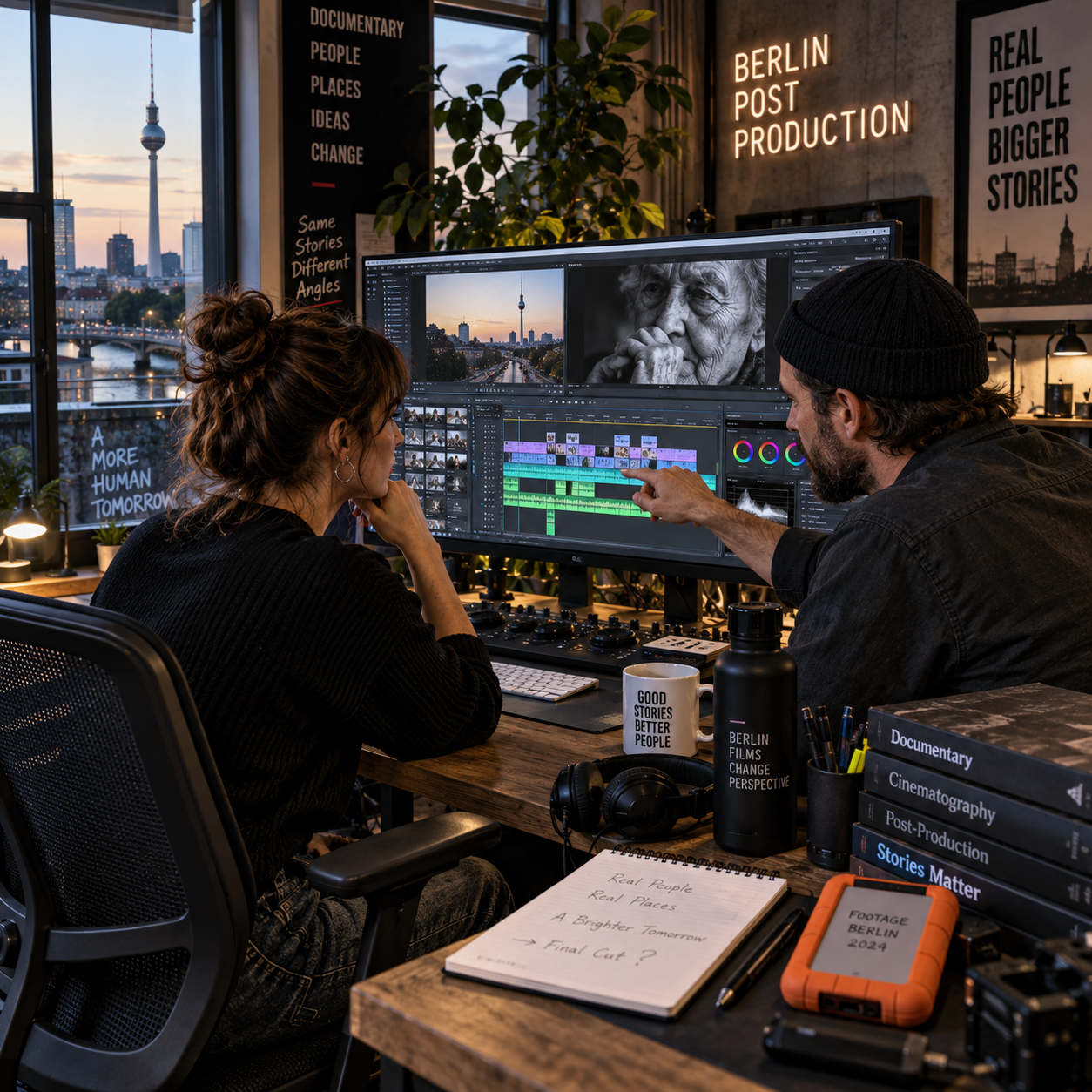
Choosing among post-production houses in Berlin is a practical decision about how your documentary will take shape after filming. A suitable partner can help you manage picture editing, sound, color, subtitles, and delivery while protecting the story’s point of view.
There is no single service package that suits every film. A first-time director with a small crew may need an editor and a reliable finishing workflow; a feature documentary with extensive archive material may require dedicated media management, sound post, localization, and more time for review. Start by identifying what your project needs, then evaluate teams against those needs rather than a generic list of facilities.
What documentary post-production involves
Documentary post-production turns recorded footage and sound into a coherent film, then prepares it for its intended audience and delivery format. It usually begins with picture editing and may continue through sound design and mixing, color grading, subtitles, and final exports.
Documentary editing is often an investigative, story-shaping process. An editor may work with interviews, observational footage, archival material, photographs, and transcripts to find structure, clarify chronology, and build scenes from real events. The process can involve changes in direction as new information emerges or access changes.
Once the picture is taking shape, other services help the film communicate clearly and meet technical requirements:
- Picture editing: organizes scenes, selects takes, develops pacing, and prepares versions for feedback.
- Sound design and sound mixing: balance dialogue, location sound, music, and effects, and address issues such as inconsistent recording or distracting noise.
- Color grading: brings shots into visual balance and establishes a considered look, while respecting the different qualities of archival and contemporary footage.
- Subtitles and localization: make dialogue accessible across languages and audiences. Translation, subtitle timing, and quality control may be separate tasks.
A post-production house may provide several of these services under one roof or coordinate specialists who work elsewhere. Confirm who is responsible for each stage, what is included, and who approves changes. An integrated team can simplify handoffs, though a specialist editor or sound studio may be a better fit for a particular film.
Why choose a Berlin post-production partner
A Berlin post-production partner can make collaboration and review easier when your production, director, or key creative team is based in the city. Local access can help with in-person sessions, but the right choice still depends on experience, availability, workflow, and project needs.
Documentary work often benefits from close discussion between director and editor. Sharing a room for selected edit sessions can make it easier to review uncertain scenes, discuss sensitive material, or compare versions. A Berlin team may also be convenient if you need to visit a grading suite or attend a sound mix. These advantages matter less if your collaborators are distributed and already work effectively through secure remote review.
Ask how the post-production house handles remote work, not just whether it offers it. A useful workflow should specify how you receive cuts, leave timecoded notes, share large media files, and keep track of revisions. For sensitive interviews or unreleased material, discuss access controls, storage, backups, and confidentiality before transferring footage.
Location does not guarantee documentary expertise. A nearby facility may have excellent rooms but limited experience with long-form nonfiction, while an editor working independently may understand the demands of archive-heavy storytelling. Consider creative fit and working process alongside convenience. Travel, facility access, and on-site attendance can also affect your post-production budget.
Services to look for in a documentary editing partner
Look for a partner who can explain which services your documentary needs, who will deliver them, and how each stage connects to the next. Documentary editing should remain the creative center, while sound, color, subtitles, and coordination support the finished film.
Begin with picture editing. Ask whether the proposed editor has handled projects with similar material and structure: for example, vérité footage, multi-character stories, archival research, or interviews recorded over an extended period. Discuss the expected edit workflow, including assembly, rough cuts, review rounds, and picture lock. A clear process helps you plan without pretending that the story will develop on a fixed schedule.
Then check the finishing services. Sound design and mixing may be especially important when scenes rely on location audio or when archive recordings vary in quality. Color grading can unify mixed cameras and footage formats, but it cannot restore detail that was never captured. Subtitles require a defined source script, translation approach, timing, and proofreading; clarify whether the provider offers translation or only prepares subtitle files.
Coordination is another service, even if it is not listed as a line item. Ask who manages media, communicates with freelancers, checks technical specifications, and confirms deliverables. Some filmmakers prefer a single post-production house to oversee the full chain. Others want to hire an editor directly and book sound and color separately. The first option can reduce handoff work; the second offers more control but places more coordination on the production.
How to assess a post-production house
Assess a post-production house by comparing its documentary experience, communication, workflow, technical capabilities, and fit for your film. A polished reel is useful, but the way a team approaches your material matters just as much.
Ask to see relevant work, then discuss the process behind it. A short branded piece may not reveal how a team handles months of footage, changing story questions, or a feature-length review cycle. You can ask what kinds of documentary projects they have supported and what they learned about collaboration or media management. Respect confidentiality: providers may not be able to share unreleased films or client materials.
Use an initial conversation to test clarity. Can the team explain its role in plain language? Does it ask about your audience, access, footage, and editorial goals before recommending services? A credible partner will distinguish what it can do in-house from what it coordinates through outside specialists.
- Experience: Look for relevant documentary formats and material, not just a general film portfolio.
- Communication: Agree on the main contact, feedback method, response expectations, and who gives final notes.
- Workflow: Confirm software and file compatibility, version naming, review tools, backup practices, and handoff requirements.
- Project fit: Discuss availability, working style, language needs, accessibility, and whether the team suits your scale and schedule.
- Budget clarity: Request an itemized estimate that identifies included sessions, revision assumptions, external costs, and possible extra charges.
Pay attention to trade-offs. A larger facility may offer more services and technical resources, but it may not provide the close editorial relationship you want. A small team can offer direct access to key collaborators, though its capacity may be limited if deadlines shift or several specialists are needed at once.
What to prepare before making an inquiry
Before contacting a provider, prepare a short project brief, an honest view of your schedule and budget, and a clear description of the material you have. This gives the post-production house enough context to recommend a realistic scope.
Your first email does not need to solve every editorial question. It should help the team understand the film and identify what information is still missing. Include:
- A one-paragraph synopsis, current logline, and intended format, such as a feature, short, or series.
- Your stage of production and the approximate amount of footage, interview material, archival content, and languages involved.
- A sample scene, teaser, or viewing link if available, with any access limits clearly stated.
- Your target milestones, such as a rough-cut review, broadcaster delivery, festival submission, or planned release.
- The services you are considering: editing, sound design and mixing, color grading, subtitles, or full post-production coordination.
- A working post-production budget or range, including whether funds for translation, archive clearance, and deliverables are separate.
Ask practical questions early: Who would edit the film? What does the estimate include? How are review rounds handled? What storage and backup arrangements apply? What would the team need before starting? If you do not yet know the final scope, say so. A good initial discussion can help turn uncertainty into a staged plan.
Planning the documentary post-production timeline
A documentary post-production timeline should follow the film’s material, decision points, and delivery needs rather than a universal number of weeks. Build in time for editing discoveries, stakeholder feedback, technical finishing, and changes that arise during review.
Many projects move through a sequence like this, although stages can overlap:
- Preparation: organize and back up media, review transcripts, check releases and archive information, and agree on the editor’s workflow.
- Story development: build an assembly or early cut, assess what the footage supports, and identify gaps or structural questions.
- Rough-cut reviews: share versions with the agreed reviewers, collect consolidated notes, and decide which changes serve the film.
- Picture lock: approve the visual edit before final sound, grading, and subtitle work. Late picture changes can create extra work across these stages.
- Finishing and delivery: complete sound design and mixing, color grading, subtitles, quality checks, and exports to the required specifications.
Set milestones around approvals rather than assuming each task has a fixed duration. Archive clearance, translation, music licensing, or delayed feedback can affect the schedule. Keep time between picture lock and delivery for technical checks, and confirm the recipient’s exact file specifications before final export.
Budget planning follows the same logic. Request separate estimates for editing and finishing, and ask what happens if the edit needs additional days or another review round. A low initial quote may exclude services your film will need; a more detailed estimate makes the total post-production budget easier to manage.
Frequently asked questions
These answers cover the main questions documentary filmmakers ask when comparing post-production houses in Berlin. The right provider depends on the film’s editorial needs, production stage, and preferred workflow.
What should I look for in a documentary editing partner?
Look for relevant documentary experience, a clear editorial process, strong communication, and an approach that fits your story and working style. Confirm availability, responsibilities, feedback rounds, and budget assumptions before committing.
Do post-production houses offer services beyond editing?
Many can provide or coordinate sound design and mixing, color grading, subtitles, media management, and final delivery. Service packages vary, so confirm which work is in-house, outsourced, or excluded from the estimate.
What materials should I prepare before contacting a provider?
Prepare a synopsis, project format, production stage, rough footage and language details, target milestones, service needs, and budget range. A sample scene or teaser can help, provided you share it securely and have permission to do so.
How can I assess whether a Berlin team suits my project?
Discuss comparable documentary work, the people who would handle your film, review and file-sharing practices, confidentiality, availability, and costs. Ask how the team would approach your specific material rather than relying on location or a showreel alone.