Collaborative Spaces and Co-Working Studios for Berlin Documentarians
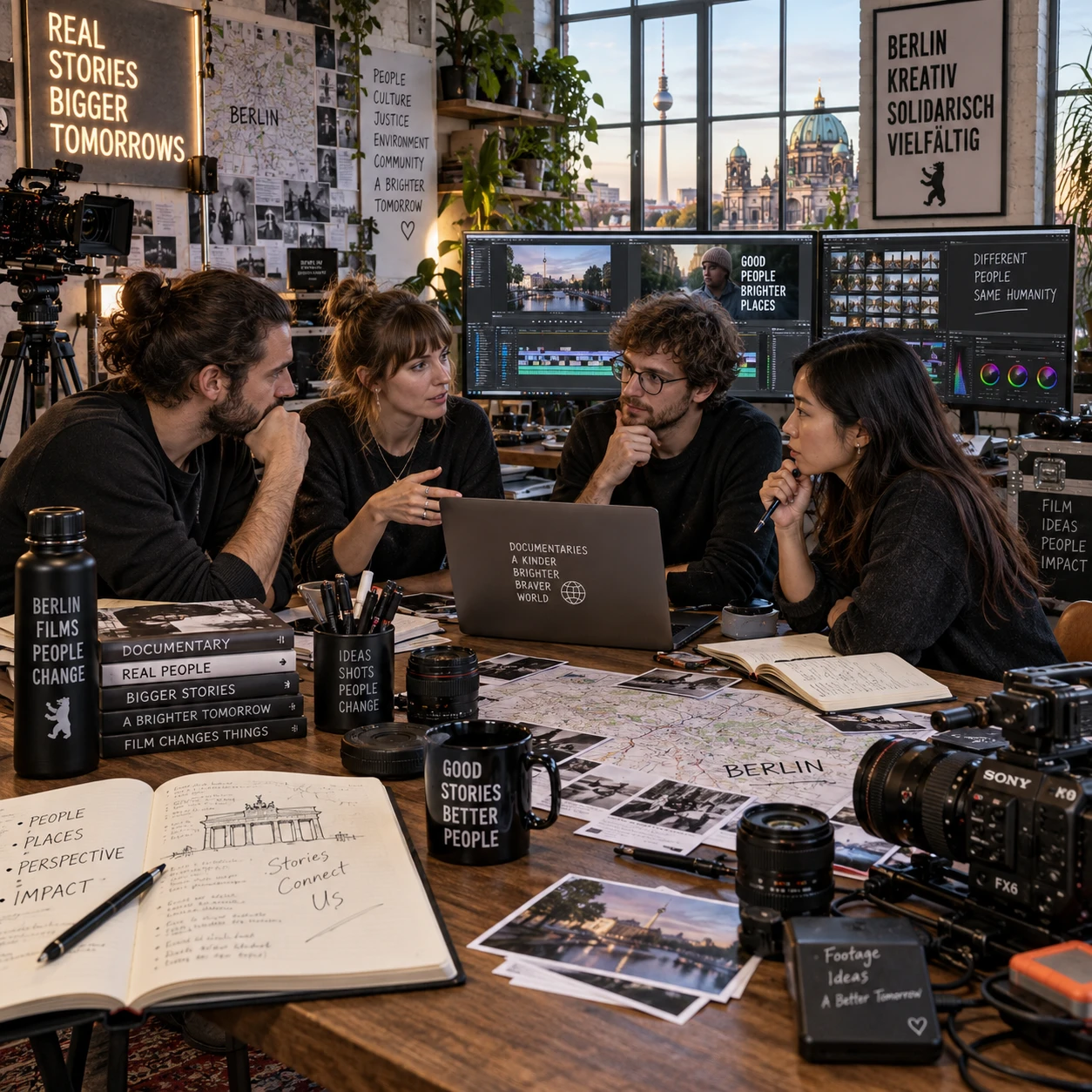
Documentary work moves between research, interviews, production planning, editing, and conversations that help a film take shape. For independent filmmakers and small production teams in Berlin, a shared workspace can provide a practical base for those tasks, as long as it suits the project’s need for both collaboration and concentration.
Why shared workspaces matter to documentarians
Shared workspaces give documentarians a place to plan, collaborate, and handle production tasks outside the home or location set. They can support the changing rhythm of documentary filmmaking, from early research and story development to edit reviews and production meetings.
A dedicated base can make it easier for a director, producer, editor, and researcher to work through the same material together. A production office or bookable meeting room may help a small team review schedules, organize releases, or discuss interview plans without relying on cafés or informal calls. In the edit stage, being in the same room can make feedback more immediate, although only if the space has enough quiet and suitable equipment.
Shared studios can also widen the circle of people a filmmaker encounters. Conversations with other Berlin documentary filmmakers may lead to useful peer feedback, crew recommendations, or new creative partnerships. That exchange is valuable when it happens naturally; it should not be treated as a guaranteed source of collaborators or funding.
The main distinction is between shared time and shared focus. A workspace may be excellent for a production meeting and unsuitable for a sensitive interview transcript or a long sound edit. Choose the space for the task, not simply for its creative atmosphere.
Types of spaces to consider in Berlin
Berlin documentarians can consider general co-working spaces, film-oriented studios, and production hubs. The right option depends on whether the priority is a flexible desk, a controlled editing environment, or a base for a team.
General co-working spaces typically suit laptop-based work such as research, writing, budgeting, scheduling, and email. They may offer shared desks, private offices, and bookable meeting rooms. Their convenience and flexible access can be helpful, but open-plan layouts may not provide dependable quiet, sound isolation, or privacy for project materials.
Film-oriented studios and production hubs may be organized around creative production, with spaces that can support collaboration and screenings. Facilities vary, so confirm what is actually available rather than assuming that a film-focused label means a properly equipped edit suite or secure equipment storage.
Specialist post-production facilities are a different category. If your project needs calibrated monitors, a color-managed room, sound mixing, or reliable acoustic treatment, a standard shared workspace may not be a substitute. Some teams use a flexible production office for planning and meetings, then book specialist facilities for the technical work.
Think of these options as a workflow map: use an everyday desk for individual admin, a meeting room for group decisions, and a specialist suite when the work depends on technical conditions. One location may cover several needs, but check each facility separately.
Essential facilities for documentary work
A suitable workspace for documentary work needs dependable connectivity, conditions for focused editing, practical meeting space, and clear rules for equipment and information. Confirm these essentials before you book or commit to a membership.
- Reliable internet: Check whether the connection supports uploading proxies, transferring research files, and remote collaboration. Ask about network security and any limits on large uploads.
- Quiet editing areas: Listen for calls, foot traffic, and shared-room noise during the hours you expect to work. A quiet desk is not the same as a soundproof edit suite, especially for dialogue or sound review.
- Meeting and screening rooms: Find out whether rooms can be reserved, how long bookings last, and whether the screen and audio setup can handle your review needs. For a rough cut, test playback in the room before inviting collaborators.
- Secure equipment storage: Ask whether storage is lockable, who can access it, and whether the space permits cameras, drives, and other production gear to remain overnight. Do not assume ordinary desk storage is suitable for valuable equipment.
- Power and workspace ergonomics: Check for enough outlets, comfortable seating, suitable desks, and permission to connect your own monitor or peripherals.
- Privacy and confidentiality: Ask how the team can discuss sensitive subjects, store documents, and take calls without being overheard.
Make a distinction between what a space provides and what your production must bring. A room may have a display but no suitable speakers; a quiet corner may still lack the acoustic control needed to judge a mix. A short trial session can reveal problems that a facilities list will not.
Choosing a space for your project and workflow
Choose a co-working studio by matching its location, access, cost, privacy, and flexibility to the work your documentary actually requires. Start with the project’s weekly routine, then identify which facilities are essential and which would simply be convenient.
For a solo filmmaker doing research and writing, a desk near transit with reliable internet may be enough. A small team preparing a shoot may need recurring access to a production office and meeting room. During editing, the priority could shift to quiet hours, monitor connections, and predictable room bookings. The best space can change as the project moves through these stages.
- Location: Consider how often collaborators need to meet and how easily they can reach the workspace. A convenient location matters more when the team gathers several times a week.
- Access: Confirm opening hours, weekend access, guest policies, and whether flexible workspace access means a guaranteed desk or only use of available seating.
- Cost: Compare the full cost of membership or bookings with your likely use. Include meeting-room charges, storage, deposits, and any limits on access rather than comparing headline rates alone.
- Privacy: Decide whether open-plan work is acceptable for your material. Interviews, unpublished footage, and production documents may require a private room or stricter device and account practices.
- Flexibility: Check minimum terms and cancellation rules. A short-term booking can reduce risk during a temporary edit sprint, while a recurring base may suit a longer production.
A practical test is to list your tasks for a typical week and mark each as focus, collaboration, or technical. If the space supports the first two but not the third, it may still work well as a production base, with specialist post-production booked separately. That trade-off is often more sensible than paying for facilities the team will rarely use.
Making collaboration work in a shared studio
Shared studios support filmmaker collaboration when teams agree on how to use common rooms, exchange feedback, and protect focused work time. A few clear routines help keep the benefits of working together without turning every task into a group conversation.
Set recurring blocks for collaboration, such as a weekly production check-in or a scheduled rough-cut review. Share an agenda and the material to review beforehand, then record decisions and next steps. This keeps meetings useful for collaborators who cannot attend in person and avoids repeating the same discussion.
For peer feedback, ask specific questions. Instead of asking whether a scene “works,” ask where the viewer’s understanding changes or which moment feels unclear. Specific prompts produce more actionable notes and keep the filmmaker in control of the final editorial choices.
- Reserve meeting and screening rooms ahead of time, particularly for sessions involving several collaborators.
- Use headphones and agreed quiet periods for editing or detailed writing.
- Keep working files on approved, access-controlled storage rather than leaving drives unattended in shared areas.
- Agree on how to handle confidential footage, interview notes, and conversations about participants.
- Share communal equipment and spaces by following the studio’s booking and cleanup rules.
More access to peers does not automatically improve a film. Constant interruptions can break concentration, and informal feedback may arrive before a cut is ready for it. Protect solo work blocks and invite critique at deliberate stages of the process.
How to find and assess a suitable space
To find a suitable Berlin workspace, check current availability, visit in person, test the conditions you need, and confirm every relevant term in writing. A listing or recommendation is a starting point, not proof that the space fits your documentary workflow.
Ask filmmakers and production contacts about spaces they have used, but verify details directly because access, room policies, and equipment can change. When comparing options, use the same questions for each one so you can distinguish a genuine fit from a persuasive tour.
- Describe your use: Tell the operator whether you need occasional desk access, a recurring production office, editing time, meetings, screenings, or storage.
- Visit at working hours: Check noise, lighting, crowding, temperature, and the availability of desks or rooms when you would actually be there.
- Test the setup: Bring a laptop or sample project if appropriate. Check the internet, display connections, power, and room acoustics; do not evaluate critical sound work on an unsuitable system.
- Review access and security: Clarify guest rules, key or entry procedures, storage access, confidentiality expectations, and what happens if equipment or files are lost.
- Confirm the agreement: Get the cost, booking process, included facilities, cancellation terms, and any additional charges in writing before committing.
A trial day or single room booking can reveal whether a studio suits your team before you take on a longer commitment. Keep a simple comparison sheet with columns for focus, collaboration, technical suitability, security, access, and total cost. The strongest choice is the one that fits the project’s real working pattern, not the space with the longest amenities list.
Frequently asked questions
These answers summarize the practical checks that matter when choosing a shared workspace for documentary production. Confirm details with each operator because facilities and booking terms differ.
What should documentarians look for in a co-working studio?
Prioritize reliable internet, quiet areas, bookable meeting rooms, suitable power and monitor connections, clear guest rules, and secure equipment storage if you need it. For confidential work, ask about private rooms and how shared networks and documents are handled.
Can shared workspaces accommodate editing and production meetings?
Many spaces can support laptop-based editing and production meetings, but the setup varies. Check room availability, noise, display connections, and playback conditions. For sound mixing, color-critical work, or other specialist post-production, confirm whether a dedicated facility is required.
How can I check whether a space is suitable for sensitive project materials?
Ask who can access rooms and storage, whether private meeting space is available, and what security practices apply to the network and equipment. Use your own approved, access-controlled storage for footage and documents, and avoid leaving drives unattended in shared areas.
What should I confirm before booking a workspace?
Confirm current availability, access hours, total cost, room-booking rules, guest policies, storage arrangements, included equipment, cancellation terms, and any extra charges. If editing conditions matter, visit in person and test the room before booking a longer period.