Ethical Considerations When Filming Vulnerable Subjects in Urban Settings
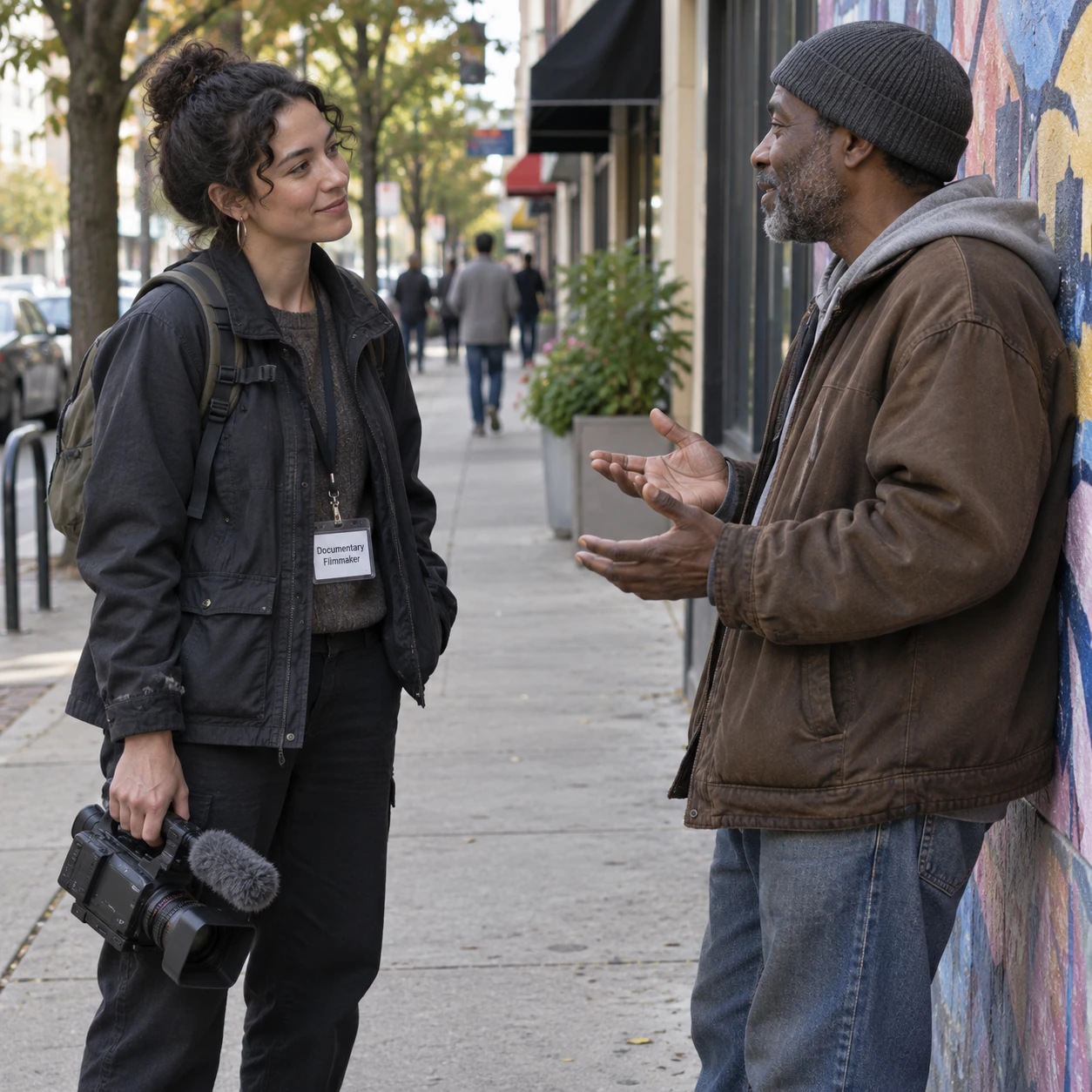
Urban documentary work often brings filmmakers close to people facing housing insecurity, poverty, migration, addiction, public scrutiny, or other difficult circumstances. The ethical challenge is not simply whether a camera may be used in a location. It is whether filming and publication could expose someone to harm, and whether the person has real control over how their story is gathered and shared.
Ethical practice starts before filming and continues through editing and distribution. Informed consent, risk assessment, privacy, duty of care, and thoughtful representation all matter; a signed release alone cannot settle every question.
Define vulnerability in the context of documentary filmmaking
In documentary filmmaking, vulnerability describes a situation in which a person may face elevated risks or have less power to control what filming does to them. It depends on circumstances and relationships, not on a permanent label attached to the participant.
A person sleeping outdoors may be identifiable through a familiar street corner, even if their name is never used. A tenant speaking about an unsafe building may fear retaliation from a landlord. Someone who appears confident on camera may still face risks related to immigration status, health, family relationships, employment, or public stigma.
Ask what could change because the camera is there. Consider the participant’s age, immediate needs, dependence on an organization, ability to understand the project, and the filmmaker’s influence over access or resources. Vulnerability can also be temporary: distress, fatigue, intoxication, or a fast-changing crisis may affect someone’s ability to make a considered choice at that moment.
Describe the risk, not the person as a problem. This keeps the filmmaker focused on practical safeguards and helps avoid stories that reduce a participant to a single circumstance.
Make consent informed, voluntary, and ongoing
Meaningful consent means a participant understands what filming involves, can choose freely, and can revisit that choice as circumstances change. Explain the project in plain language before recording, then check in again at important stages.
Cover the essentials: who is making the film, why, where it may appear, whether the footage could be licensed or promoted, and what limits apply to withdrawal once editing or distribution is underway. Avoid promises you cannot keep, such as guaranteeing anonymity or a particular final cut. Use an interpreter or accessible format when needed, and allow time for questions without a camera pointed at the person.
Consent should be voluntary and specific, not a condition for receiving services, shelter, payment, or access to an organization. If a participant depends on a charity, outreach worker, or filmmaker for support, make clear that declining will not affect that relationship. A release form records permission; it does not replace an understandable conversation or ongoing check-ins.
- Ask permission before filming and before recording sensitive details.
- Offer a pause, a camera-off conversation, or a chance to stop for the day.
- Reconfirm consent after a major change in the story, the participant’s circumstances, or the intended use of footage.
- Explain realistically when withdrawal becomes difficult, such as after a film has been publicly distributed.
If someone changes their mind, stop recording, listen without pressure, and clarify what they want done with existing material. The project’s agreements, production stage, and applicable rules may affect what can be removed, so be candid rather than offering an automatic guarantee.
Assess privacy and safety risks before filming
A risk assessment identifies how filming, storing, editing, and publishing material could expose participants or bystanders to harm. Complete it before a shoot, then update it when locations, circumstances, or distribution plans change.
Look beyond names and faces. A building entrance, distinctive tattoo, voice, vehicle, routine, or combination of background details may identify someone. In a tightly connected neighborhood, even a wide shot can reveal where a person sleeps, seeks help, or meets family. Consider whether publication could lead to harassment, eviction, legal or employment consequences, unwanted attention, or renewed trauma.
Filming in public spaces does not remove the need to consider consent and privacy. Rules differ by jurisdiction, and public visibility is not blanket permission to tell someone’s story. Be especially careful with children, people in crisis, and bystanders who become prominent in the frame. When practical, reframe, ask permission, blur identifying details, or leave the footage out.
Use a simple risk check: identify, assess, reduce, review. Identify who could be recognized; assess the likelihood and severity of harm; reduce exposure through framing, location choices, anonymization, or limited access; and review the decision before release. Secure raw footage and restrict access to people who need it. Anonymity can reduce risk, but may also weaken a participant’s ability to be recognized for their own testimony; discuss that trade-off with them.
Manage power imbalances and avoid exploitation
Filmmakers hold power through cameras, editing, funding, access, and control over the finished work. Managing that power means making the participant’s agency visible in the process, not simply asking them to trust your intentions.
Explain what you can and cannot offer. Payment, transport, meals, or practical support may help someone take part, but they can also create pressure if a person is in immediate need. Keep compensation clear and proportionate, and do not make it contingent on a dramatic disclosure or a usable scene. Where a local organization introduces participants, protect their freedom to decline without consequences for services.
In the edit, resist treating people as symbols of urban decline, resilience, or social failure. Give context, preserve meaningful complexity, and avoid cutting a response so it appears to say something the participant did not mean. Seek views beyond the most visually striking moment. Representation with dignity does not require making every subject admirable; it requires accuracy, proportion, and respect for their humanity.
A useful editorial question is: would this scene still feel fair if the participant, their family, or their neighbors watched it? That test cannot replace rigorous reporting, but it can expose humiliating framing or a power imbalance hidden by the filmmaker’s preferred narrative.
Support wellbeing during and after production
Duty of care means taking reasonable steps to reduce foreseeable harm during production and treating participants respectfully afterward. It does not mean promising to solve problems outside the filmmaker’s role.
Use trauma-informed practice: explain what will happen, avoid pressing for details, let participants set boundaries, and watch for signs that a conversation should pause. Agree on a discreet signal for stopping if useful. If distress arises, stop filming, offer space, and ask what support the person wants; do not assume they want advice, touch, or immediate referrals.
Plan follow-up before filming. Give participants a reliable contact, tell them when the project is likely to be released, and explain whether they can review factual details or only receive updates. Be clear about limits: editorial control may remain with the filmmaker, and a screening copy may not be available. If the project ends, close the relationship respectfully rather than disappearing after obtaining the footage.
Boundaries protect both sides. Filmmakers should avoid presenting themselves as counselors or caseworkers unless that is genuinely their role. When a participant asks for help, respond honestly, share relevant local resources when appropriate, and do not use assistance as leverage for continued access.
Make ethical editorial and distribution decisions
Ethical decisions continue in the edit and at release: context, sequencing, captions, publicity, and platform reach can all change how a participant is understood or exposed. Reassess risk when the film’s final form becomes clear.
Check whether a scene’s meaning depends on material that was removed, whether captions add claims the footage cannot support, and whether a trailer uses a vulnerable person’s image in a sensational way. Consider where and how the film will circulate, including social media clips that may travel farther than the full documentary. A participant who accepted a conversation for a local screening may not have anticipated global, searchable distribution.
When possible, consult participants about factual errors or new safety concerns without implying that they control the edit. If the risk has materially changed, consider masking identifying details, changing a location reference, limiting promotional use, or withholding a scene. These choices can affect narrative clarity and access to evidence; document the reasoning, and choose the least harmful option that still serves the film’s purpose.
Ethical filmmaking is a series of decisions, not a form signed at the start. Treat consent, risk assessment, privacy, and representation as connected checks from first contact through publication. The strongest documentary work can remain honest and compelling while giving participants a meaningful voice in how their lives are shown.