The Role of Berlin in European Documentary Co-Productions
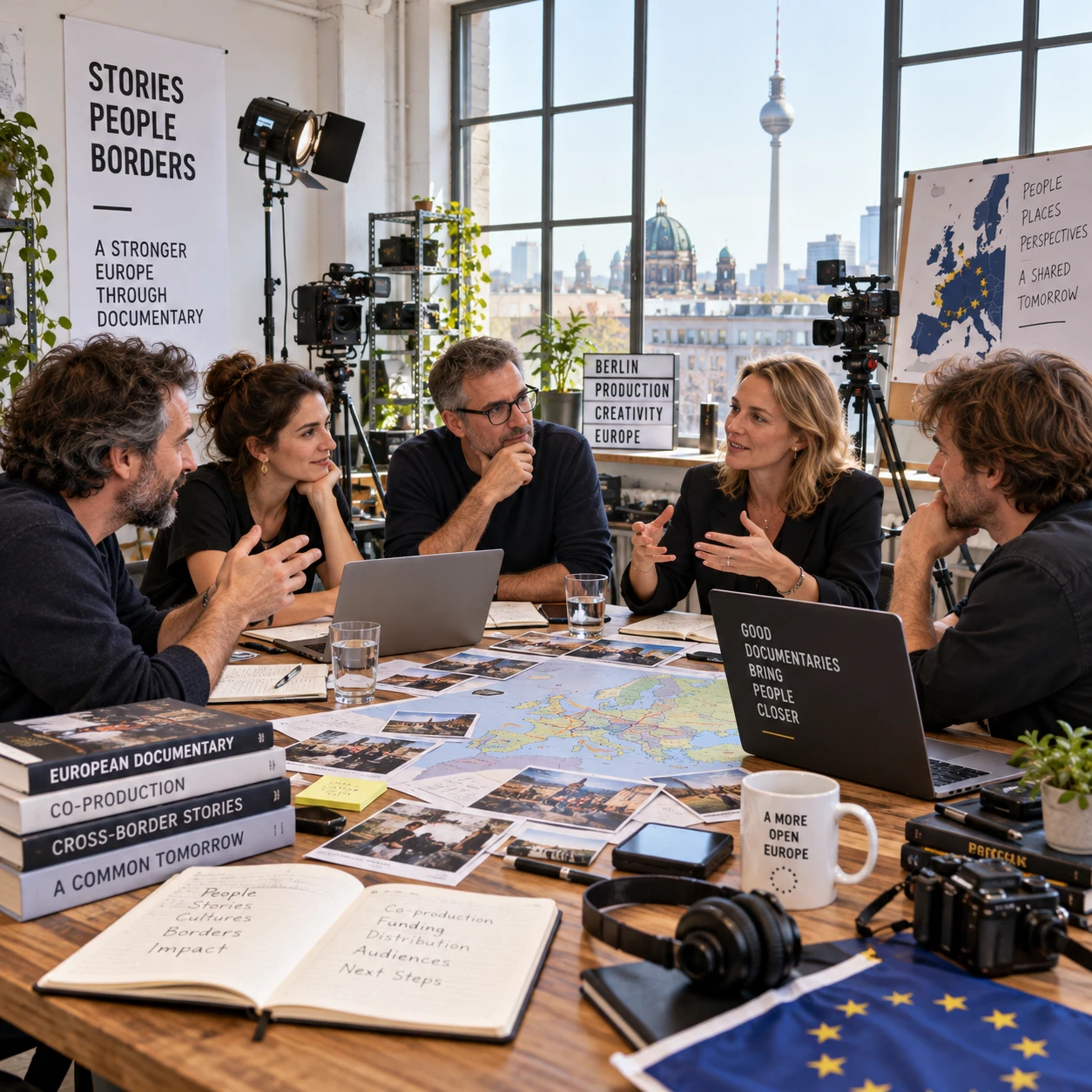
Berlin’s role in European documentary co-productions is less about being the continent’s sole filmmaking center and more about helping people, companies and ideas meet. The city brings together Berlin-based production companies, European documentary filmmakers, public institutions and international industry events that can help a project move from an initial concept toward financing, production and distribution.
For filmmakers considering a cross-border partnership, the value lies in the fit between collaborators. A Berlin connection can open useful conversations and provide production expertise, but a successful co-production still depends on clear creative goals, realistic financing and agreed responsibilities.
What Makes Berlin a Hub for Documentary Collaboration?
Berlin is a documentary collaboration hub because it connects filmmakers and production partners from across Europe through its companies, professional networks and international events. That access can help a project find the right creative or production partner, though it does not guarantee funding or distribution.
The city’s international character gives European documentary filmmakers opportunities to meet colleagues working in different languages, territories and documentary traditions. Berlin-based production companies may bring experience in development, budgeting, production management and pitching projects to partners outside Germany. A producer who understands both the film’s subject and the practical demands of cross-border work can be especially valuable.
Festivals and industry markets also create meeting points. The Berlinale and its European Film Market, alongside documentary-focused gatherings and professional events, can help teams introduce projects, meet commissioners and distributors, and strengthen existing relationships. These settings are useful for building a network, but a brief meeting is only a starting point. Strong partnerships require follow-up, due diligence and time spent testing whether collaborators share the same editorial approach.
Berlin should be understood as one node in a wider European network that also includes established documentary communities, funds and markets in other countries. The practical question is not whether a project needs a Berlin partner, but whether a partner based there brings capabilities and relationships the film genuinely needs.
How Co-Productions Bring European Projects Together
A European documentary co-production brings producers in two or more countries together to develop, finance or produce a film, with each partner contributing agreed resources and responsibilities. The arrangement can widen a project’s creative and financial base, but it also requires more coordination than a single-country production.
Partners may divide tasks according to experience and access. One producer might lead editorial development and work with the director, while another handles local filming, contributors, permits or post-production in a second territory. Financial contributions can come from producer investment, broadcasters, distributors, film funds or other public support, subject to each funder’s rules and the project’s eligibility.
Co-production is not simply a way to combine budgets. Partners should decide early how creative decisions will be made, how costs and income will be shared, and who controls key rights. A practical agreement usually addresses:
- Creative responsibilities: editorial authority, director-producer communication and approval of major changes.
- Financial contributions: confirmed and anticipated funding, cash-flow responsibilities, contingency and the treatment of cost overruns.
- Rights and revenues: ownership, territories, distribution windows, recoupment and revenue reporting.
- Production duties: local crew, travel, equipment, insurance, legal compliance and delivery materials.
For example, a Berlin producer and a partner in another European country might develop a film about a shared regional issue. The local partner can bring access to contributors and language knowledge, while the Berlin company coordinates development and helps present the project to potential European financiers. The structure works only if those contributions and decision rights are documented rather than assumed.
Berlin’s Production and Funding Ecosystem
Berlin’s production and funding ecosystem can help documentary projects access development expertise, industry relationships and possible public support. Availability depends on the project, the partners’ eligibility and current fund rules; a Berlin address alone does not make a film eligible for funding.
Berlin-based production companies vary in scale and focus. Some specialize in creative documentary, while others work across formats or provide services such as budgeting, line production and post-production coordination. When assessing a company, look beyond its location. Consider its documentary track record, experience with international partners, financial capacity and the time it can commit to the project.
Film funds and public support may operate at regional, national or European levels. Berlin-Brandenburg funding structures, German federal support and European mechanisms such as Creative Europe MEDIA or Eurimages can be relevant in some cases, but they have distinct criteria and do not apply automatically to every documentary. Eligibility can depend on factors such as the nationality and independence of producers, the project’s cultural or creative profile, financing structure, spend and application timing. Check the current official guidelines before building a budget around a potential grant.
Public funding may offer meaningful development or production support, yet application cycles can be competitive and slow. A producer should map deadlines against the film’s creative schedule and identify a fallback plan. Treat prospective support as prospective until it is confirmed in writing.
Berlin’s ecosystem is therefore most useful when a project matches the strengths of particular producers and support structures. Start with the film’s needs, then identify which companies, institutions and funds can realistically address them.
From Development to Distribution: Berlin’s Contribution
Berlin can contribute at several stages of a documentary’s life, from shaping a project for partners to helping the finished film reach audiences. Its contribution varies by team: one producer may focus on development and financing, while another may bring production capacity or distribution relationships.
Development and financing
During development, producers can help refine the treatment, research plan, access strategy and budget. They may also shape a pitch package for film funds, broadcasters or co-producers. A strong package explains why the story matters, how the filmmaker can tell it, what access is secured and what the project needs next. A Berlin-based producer can help connect that case to European partners, but the film’s editorial clarity remains essential.
Production and post-production
Once financing is in place, cross-border production requires detailed coordination. Partners may manage local filming teams, contributor agreements, travel, translation, rights clearances and post-production schedules. A shared calendar and a single, current budget help prevent different partners from working from conflicting assumptions. Build translation, subtitling and legal review into the plan rather than leaving them until delivery.
Festivals, markets and distribution
After completion, international film festivals and markets can create visibility and help producers meet distributors, broadcasters and sales agents. Berlin’s industry events are one route into those conversations, while partners in other countries may know relevant festivals and buyers in their own territories. Festival exposure is not the same as a distribution deal; teams still need a release strategy that matches the film’s audience, rights and resources.
Co-production can support film distribution across borders when partners bring local knowledge and relationships. The trade-off is that rights may be divided among several parties, which makes clear territory definitions and approval procedures especially important.
Opportunities and Challenges of Cross-Border Work
Cross-border documentary work can combine expertise, access, funding opportunities and audiences from multiple countries. It also adds administrative and creative complexity, so the benefits are strongest when each partner contributes something specific that the others cannot readily provide.
Shared financing may spread risk and make a project more achievable, but several funding applications can create mismatched schedules or conditions. A partner may expect a particular version of the film, while the director sees the editorial structure differently. Language differences, local labor rules, currency changes and varying production practices can also affect costs and timing.
Three common mistakes deserve attention:
- Choosing partners for funding access alone. Filmmakers may assume a producer’s location will unlock a grant. In practice, eligibility depends on formal criteria, and a partner without editorial or production fit can slow the film. Choose for demonstrated contribution first, then verify funding rules.
- Leaving rights until later. Teams sometimes postpone rights discussions to focus on development. That can create disputes over territories, festival choices or recoupment once financing arrives. Record the working assumptions early and have a qualified lawyer review the final agreement.
- Underestimating coordination time. Multiple countries mean more approvals, translation and scheduling. Add time for partner review and decision-making to the production calendar, and identify one person responsible for keeping shared documents current.
These challenges are manageable when partners surface them before production. A written decision process, realistic schedule and transparent budget are less glamorous than a strong trailer, but they often determine whether a collaboration stays workable.
Building Effective Partnerships in Berlin
To build an effective Berlin partnership, define what the film needs, identify producers with relevant experience, and agree on creative, financial and legal responsibilities before relying on a co-production structure. A focused approach helps filmmakers distinguish a genuine collaborator from a useful but nonessential contact.
- Write a one-page project brief. Summarize the subject, access, director’s approach, current stage, budget range and immediate needs. Be clear about what a partner can influence and what is already fixed.
- Research relevant companies. Review completed documentaries, co-production credits and the role each company played. Ask whether the producer has handled the specific tasks your project needs, such as international financing or production in a particular territory.
- Use events for purposeful introductions. Festivals and markets can help you meet potential partners, but prepare a concise pitch and a specific request. Follow up with a treatment or budget only when the recipient wants to see it.
- Test the working relationship. Discuss editorial expectations, communication habits, availability and how disagreements will be resolved. A short development collaboration can reveal differences before a larger commitment.
- Document the deal. Confirm contributions, rights, decision-making, deadlines and exit provisions in a written agreement. Consult legal and accounting professionals familiar with the relevant territories and funding rules.
Ask prospective partners direct questions: What would you lead? Which funds or markets are realistic for this project? Who approves editorial changes? What happens if expected financing does not come through? Specific answers help reveal whether the partnership is built around the film or around a vague promise of access.
Berlin can be a valuable base for European documentary co-productions because it connects people, production knowledge and industry platforms. Its greatest contribution is often the quality of the collaboration it helps make possible. For filmmakers, the soundest next step is to assess the project’s actual needs and choose partners whose expertise, commitments and expectations align with them.